





COOLING VEST
FROM JUST 54.95



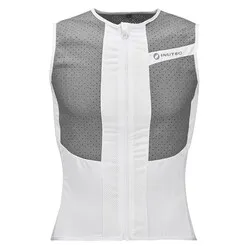
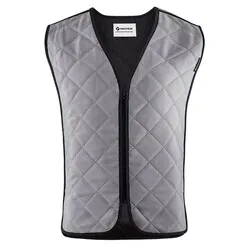
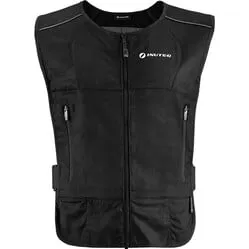
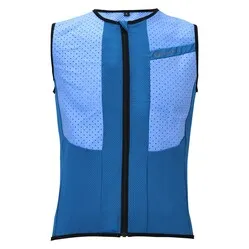
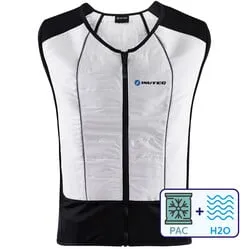
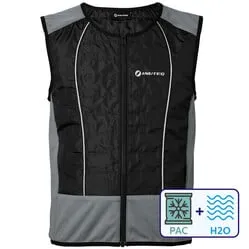
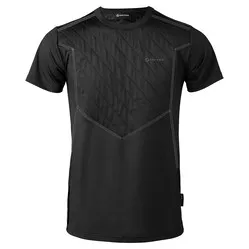
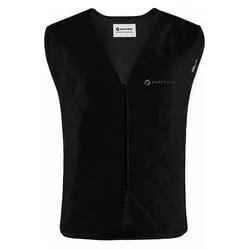
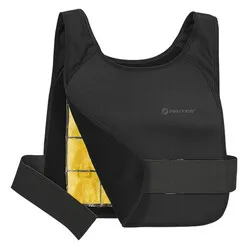
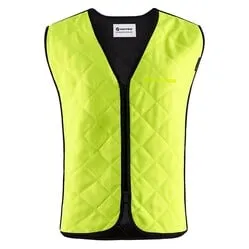
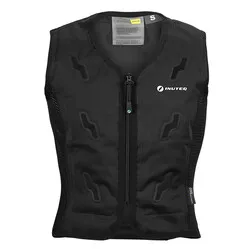
Quick answer: which cooling vest suits you?
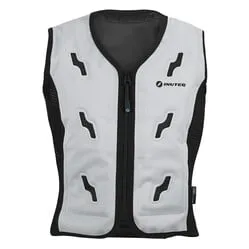
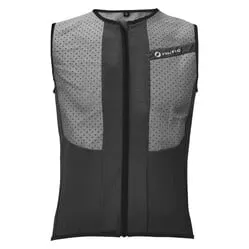
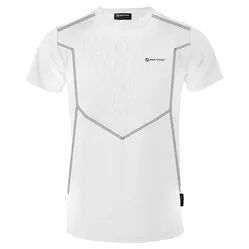
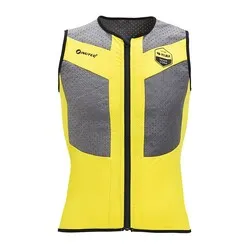
If you work outdoors and only have tap water available, choose a cooling vest with H2O technology: submerge it, wring it out and it cools for 2 to 8 hours. If you want cooling without your clothing getting wet, choose DRY: you fill that vest with water and it stays dry inside and out, with a cooling time of up to 3 days. If you work in extreme heat, under protective clothing or without airflow, choose a PCM cooling vest with elements from the fridge or freezer (2 to 4.5 hours per set). If you are not sure, the selection aid at the top of this page guides you to the right vest in a few steps.
Choosing a cooling vest for your situation
Every work and sports situation places different demands on a cooling vest. That is why our range is organised by use:
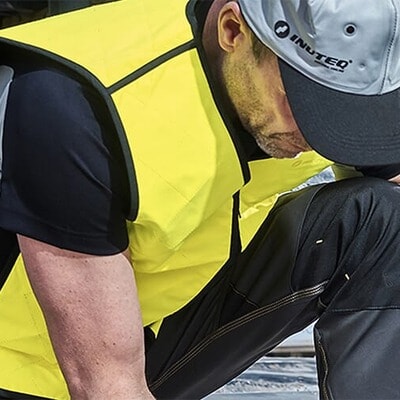
- Cooling vest for outdoor work and construction: robust vests you activate with tap water, even on sites without a fridge or freezer. High-visibility versions certified to EN ISO 20471 are available.
- Cooling vest for industry and heat professions: PCM vests for extreme temperatures, high humidity and work under protective clothing.
- Cooling vest for healthcare: thin vests that stay dry and fit discreetly under work clothing.
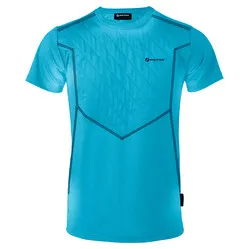
- Cooling vest for sport and leisure: light vests with plenty of freedom of movement, for running, cycling and more.
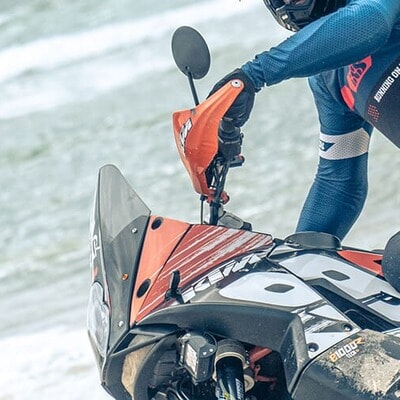
- Cooling vest for motorcycling: an evaporative vest under a breathable jacket, PCM under a closed jacket.
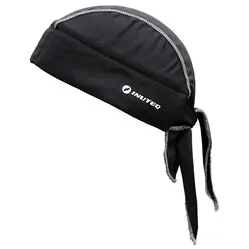
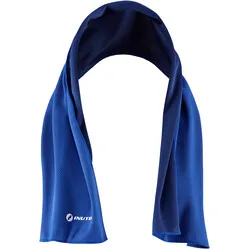
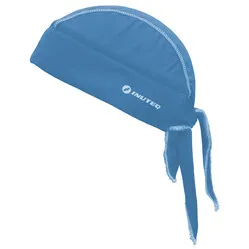
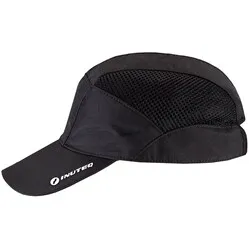
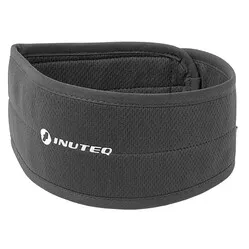
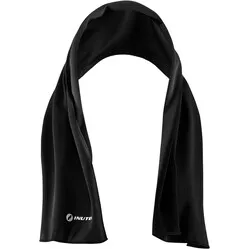
If you would prefer something smaller than a vest, have a look at our cooling accessories, such as neck coolers, caps and cooling towels.
The four cooling technologies explained
All cooling vests in this range are made by INUTEQ, using four cooling technologies. Which one suits you best depends mainly on your environment: is there airflow, is water available, and do you have access to a fridge or freezer?
H2O: submerge in tap water
With INUTEQ-H2O you submerge the vest in tap water for about two minutes and squeeze out the excess. The vest cools through evaporation, so you wear it as the outer layer and it works best with some airflow. Depending on temperature and humidity it cools for 2 to 8 hours. This is the most popular technology for outdoor work: all you need is a tap or a bucket.
DRY: cooling without getting wet
With INUTEQ-DRY you fill the vest with roughly half a litre of tap water through an opening at the back. The water is enclosed, which keeps the vest dry inside and out. Evaporation does the work here too, so light airflow helps. A DRY vest lasts the longest: up to three days on a single fill.
PAC and PCM: cooling with elements
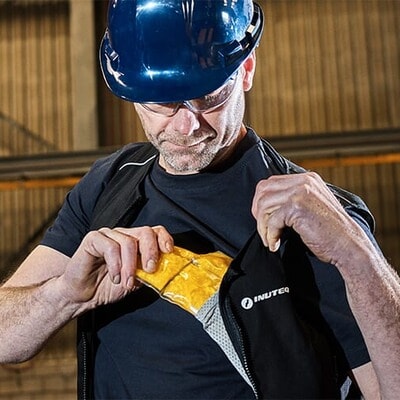
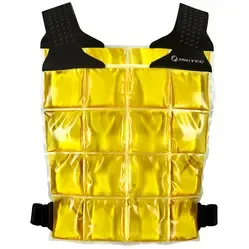
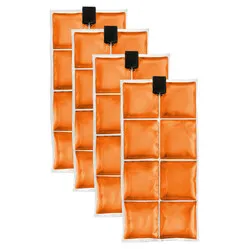
With INUTEQ-PAC the vest holds cooling elements that you activate in the fridge, the freezer or in ice water. These elements absorb heat as they change from solid to liquid, hence the name PCM (Phase Change Material). One set cools for 2 to 4.5 hours and can then be reactivated. This is the only technology that does not rely on evaporation, making it the right choice in high humidity, without airflow or under protective clothing.
PVA: extra cold, shorter duration
With INUTEQ-PVA a highly absorbent polyvinyl alcohol fabric is used. You submerge the product and wring it out. PVA cools more intensely than H2O, up to around 15 degrees below the ambient temperature, but for a shorter time: 1 to 4 hours. You will find this technology in the Bodycool Xtreme cooling vest and in our cooling towels.
Cooling technologies compared
- H2O: submerge in tap water, 2 to 8 hours of cooling, worn over clothing. Strong for outdoor work without cooling facilities.
- DRY: fill with approx. 500 ml of tap water, up to 3 days of cooling, worn over clothing. Strong on long working days, stays dry.
- PAC and PCM: elements from the fridge, freezer or ice water, 2 to 4.5 hours per set, can be worn under clothing. Strong in extreme heat and high humidity.
- PVA: submerge and wring out, 1 to 4 hours, worn over clothing. Strong for fast, intense cooling.
If you cannot choose between evaporation and cooling elements, the Bodycool Hybrid cooling vest combines both: you activate the vest itself with water and it also takes PCM elements.
Activating a PCM cooling vest
Activating a water-based cooling vest
Which cooling vest should I choose?
Run through these requirements and you will usually arrive at the right technology:
- I want the longest cooling per activation - DRY
- I do not want my clothing to get wet - DRY or PCM
- I only have a tap or a bucket available - H2O or PVA
- I work in high humidity - PCM
- I wear special work clothing and need the vest underneath - PCM
- I want to set the cooling level myself - PCM (choose the temperature of the elements)
- I want the coldest cooling as fast as possible - PVA
- I need to be clearly visible on the road - H2O in a high-visibility version (EN ISO 20471)
With PCM vests you also choose the temperature of the cooling elements. The rule of thumb: pick elements that are around 15 degrees cooler than the environment you work in. For sports, 6.5 and 15 degrees are common; for work, 21, 24 and 29 degrees.
Frequently asked questions about cooling vests
- How does a cooling vest work?
There are two principles. With evaporative cooling (H2O, DRY and PVA) the vest absorbs water; that water evaporates while you wear it and carries away your body heat, just like sweat does. With PCM cooling the vest holds elements that absorb heat as they change from solid to liquid. You activate those elements in the fridge, the freezer or in ice water.
- Which cooling vest suits my work or sport?
That mainly depends on your environment. Outdoors with a tap nearby: H2O. Long working days without wet clothing: DRY. Extreme heat, high humidity or working under protective clothing: PCM. Short, intense cooling during sports: PVA. See the category tiles at the top of this page or start the selection aid.
- How long does a cooling vest cool?
That differs per technology. An H2O vest cools for 2 to 8 hours, a PVA product for 1 to 4 hours, a set of PCM elements for 2 to 4.5 hours and a DRY vest for up to three days on a single fill. With evaporative technologies, temperature, humidity and airflow determine how long the vest keeps going.
- How long does it take to activate PCM cooling elements?
Roughly 20 minutes in ice water, 40 minutes in the freezer or 60 minutes in the fridge. A second set of elements is handy if you want to keep cooling all day: you simply swap them over.
- Do I wear a cooling vest under or over my clothing?
Evaporative vests (H2O, DRY and PVA) only work as the outer layer, because the water needs to evaporate. A PCM vest also works under clothing, which makes it the right choice if you wear mandatory work clothing or protective gear over your vest.
- Can I reuse a cooling vest?
Yes. You simply reactivate evaporative vests with water; a vest lasts for hundreds of activations. PCM elements can be refrozen thousands of times. Always check the washing instructions on the product page, as cooling clothing needs different care from regular clothing.
- How do I choose the right size cooling vest?
On the product page, click the information icon next to the size selection. It shows exactly what to measure in order to pick the right vest. A well-fitting vest rests against your body without pinching, which matters for the cooling effect.
- Are there cooling vests with high-visibility certification?
Yes. The 2BSafe cooling vests comply with EN ISO 20471 class II. The orange version with a zip also meets the Dutch RWS requirements for working alongside roads.