





Ergonomic office chair for a slender build


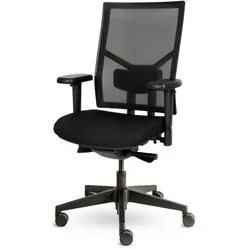
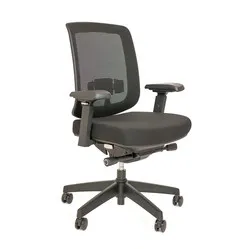
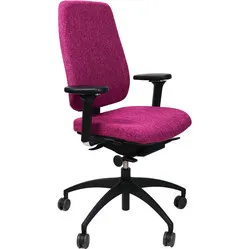
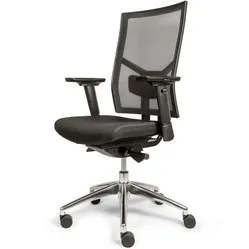

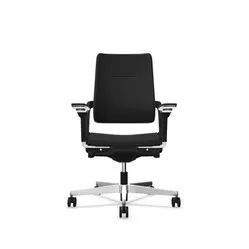
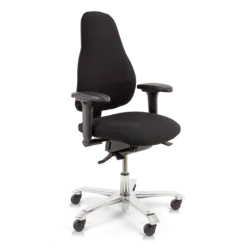

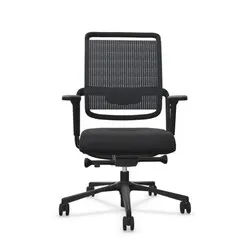
When should you choose an office chair for a slender build?
You should choose such an office chair if you find that many chairs look fine on paper but don’t quite fit properly in practice. Often, the problem isn’t with the seat height or the backrest, but with the overall adjustment once you actually sit down to work.
With slimmer users, you often find that the chair is initially adjusted correctly for seat height, seat depth and lumbar support, but that the armrests are still too wide. As a result, they do not fit properly under the elbows or forearms, and you lack support precisely at that point.
- You may be sitting correctly, but your arms aren’t resting comfortably
- your armrests do not logically extend under your elbows
- your shoulders tend to take on more tension
- you’re mainly looking for more precision in your chair’s adjustment
In that case, it is wise to look not only at general seating comfort, but also at how well a chair can be adjusted to a slimmer build.
Why does a slender build require extra attention when choosing a chair?
An ergonomic office chair should adapt to your body, not the other way round. With a slimmer build, this usually means that the standard settings of many chairs are just a bit too coarse. You may be able to adjust the chair reasonably well, but not precisely enough.
Sitting comfortably doesn’t start with the armrests
The basics always remain the same: first, adjust the seat height, seat depth and backrest correctly. Only when you are sitting stably and relaxed should you look at the armrests. These should logically rest under your elbows and forearms, without you having to hold your arms out to the side.
That’s when the armrests really come into their own
It is precisely on this last point that a slimmer build often hits its limits. A chair may feel perfectly comfortable in the seat and backrest, but still not fit well if the armrests cannot be adjusted inwards far enough. That is why the adjustability of the armrests is an important consideration with this type of chair.
Adjustability often says more than a general size
A chair does not need to be designed as a small model to still work well for a slimmer build. Often, the difference lies in the extent to which you can fine-tune components, such as seat height, seat depth, lumbar support and, above all, the position of the armrests.
What complaints or signs are common?
When a chair doesn’t fit properly, you often compensate without realising it. You don’t always notice this straight away, but you will after a long working day.
Common signs include:
- tension in the neck and shoulders
- a pulling sensation in the upper back or shoulder blades
- insufficient support under the elbows and forearms
- the feeling that your arms are ‘hanging loosely’ whilst typing or using the mouse
A well-adjustable chair can make a big difference. When considering your overall workspace, look into an ergonomic office chair, an NPR 1813 office chair, a monitor arm or a sit-stand desk.
What should you look out for when choosing an office chair for a slender build?
Don’t just focus on whether a chair feels comfortable at first glance. More importantly, you need to be able to adjust the chair step by step to suit your body.
1. Seat height and seat depth must be correct first
Your feet must rest firmly on the floor and your thighs must be comfortably supported. Next, check that the seat depth fits properly, so that you have sufficient support without the chair pressing into the backs of your knees.
2. The backrest must support your posture
The backrest and any lumbar support must suit the way you sit and work. Only once you are sitting correctly in the basic position can you properly assess whether the rest of the chair really suits you.
3. Only then should you check the position of the armrests
Now check whether the armrests are positioned correctly under your elbows and forearms. For a slimmer build, this is often the deciding factor. If they are too far apart, you will still lose support, even if the chair is otherwise correctly adjusted.
4. Pay attention to the adjustability of the armrests
Width adjustment is important, but height, depth and angle also make a big difference. The more precisely you can position the armrests, the greater the chance that the chair will be truly comfortable during a normal working day.
5. Look at the bigger picture
Ultimately, the best chair for a slender build is one that is fundamentally comfortable and then offers enough scope to fine-tune the settings precisely to your body.
Tips for adjusting an office chair for a slender build
- Start with your seat height
Position the chair so that your feet are flat on the floor and your knees are at a relaxed angle.
- Then adjust the seat depth
Ensure your thighs are well supported, without any pressure in the backs of your knees.
- Next, check the backrest
Your back should be comfortably supported so that you are sitting in a relaxed and stable position before you continue with fine-tuning.
- Next, position the armrests under your elbows and forearms
Now check whether the armrests can be moved in sufficiently and are at the correct height. Your shoulders should remain relaxed and your arms should be supported naturally.
- Test the chair in your actual working position
Check the settings whilst typing and using the mouse. Only then will you really notice whether the chair supports you properly during a working day.
Frequently asked questions about office chairs for a slender build
- Is an office chair for a slender build automatically a small office chair?
No. It’s mainly about how well the chair can be adjusted to your body. A chair doesn’t have to be small to work well for someone with a slimmer build.
- Why are armrests so important for a slimmer build?
Because you can only work comfortably when your elbows and forearms are properly supported. If the armrests are too far apart, you lose that support even if the rest of the chair is correctly adjusted.
- Should I start with the armrests when adjusting my chair?
No. You should always start with seat height, seat depth and back support. Only then should you adjust the armrests so that they fit your final sitting position properly.
- What should I look out for if I feel that many chairs are too wide?
Pay particular attention to how precisely the chair can be adjusted and whether the armrests can be moved inwards sufficiently. It is precisely this combination that often determines whether a chair is truly comfortable to use.