



What is a healthy posture in the office?
Table of Contents
1. Cure still takes precedence over prevention2. What does Google say?
3. What do researchers say?
4. So is there no single posture ‘to rule them all’?
We’re all trying to live healthily. Exercising, eating healthily, living mindfully, fit guys, fit girls, ‘turn your frikandel into a carrot’ and all those trendy health slogans. It’s actually quite strange, then, that when it comes to our work, we only start paying attention to our health when things threaten to go wrong. Why don’t we extend our desire for a healthy life to the place where some of us spend more than 40 hours a week?
1. Cure still takes precedence over prevention
Fortunately, more and more people are taking their health in the workplace seriously. On our website, for instance, we’re seeing an increase in visits to pages about good sitting and standing posture, tips for preventing aches and pains, and there’s also a growing interest in healthy (preventative) aids. Think of the ergonomic mouse.
It is striking that we tend only to start looking after our bodies once they start sending us signals of pain. The Google statistics below clearly illustrate this:
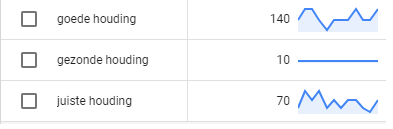

These are monthly search queries in the Netherlands. It would be great if the numbers were the other way round; our health would probably be in better shape.
2. What does Google say?
Google, your best friend for new knowledge. We can all be our own doctor or physiotherapist. Not literally, of course, but topics such as ‘healthy posture’ are described in detail and can help you a great deal. Let’s give it a go, because by now we know plenty of blogs that are just waiting to tell you how it’s done.
General healthy posture
Below is a screenshot of the search term ‘healthy posture’ that I entered.
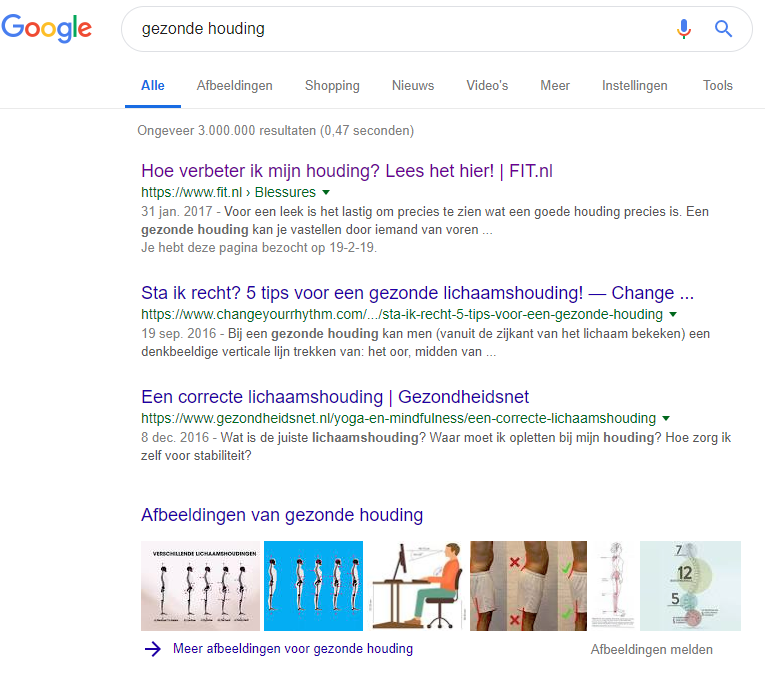
Judging by what Google suggests, most of us will read these three pages carefully. When you read and compare them, you’ll find that they offer more or less the same advice:
- Work on maintaining a healthy physical posture (including a helpful photo!)
- Be mindful of your posture, because it takes time. Habits are so hard to break, aren’t they?
- Keep moving. Get up, exercise, train your muscles. Lazing on the sofa or gathering dust in your office chair isn’t good
Conclusion: a quick Google search on posture in general
All of the above sounds very logical. You start with the basics: your posture. Then you try to think about it a hundred million billion times a day. Until that healthy foundation becomes second nature. Exercise is important to achieve this. A strong body adopts good posture more quickly. What’s more, moving around is better for you than sitting or standing still.
The technically correct posture in the office
Below is a screenshot of the search term ‘healthy posture in the office’ that I entered.
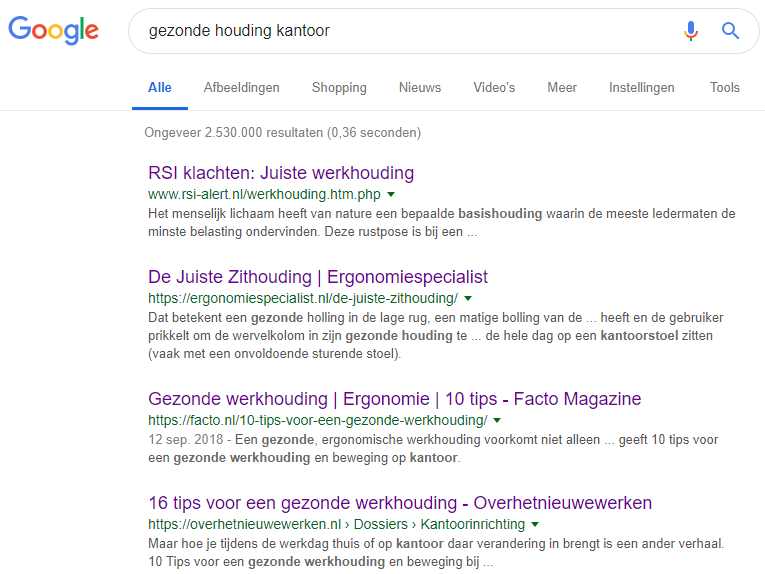
For the office environment, I have highlighted the first four results, as links 3 and 4 contain the same content. The key recommendations that emerge from this are:
- Adopt a good sitting posture (using supportive aids if necessary)
- Alternate between sitting and standing, as sitting for long periods is not good for you
- Keep moving, as movement is medicine
Conclusion: a quick Google search on office posture
In our Google search for healthy posture in the office, sitting posture clearly dominates. Not only because the sources themselves place the greatest emphasis on it, but also because Google interprets the search term in this way. What I also find striking is the variation in the message from the different sources. RSI-Alert focuses purely on sitting, whilst Facto opens its article with the dangers of prolonged sitting.
Difference between Google search results for general posture and office posture
What is particularly striking is that the sources’ messages regarding good posture in general are much more closely aligned. In short, they say: ‘This is good posture; to make it second nature, you need time, and ideally you should exercise and play sport regularly to keep your body strong’.
The sources on good posture in the office focus much more on one aspect: the correct (sitting) posture. They do mention an active posture, but the focus on this seems to be considerably less. You read virtually nothing at all about a healthy and strong body.
3. What do researchers say?
Now it gets interesting, because if we are to believe the various studies that have been carried out, achieving the correct posture is a tricky business. The focus here is primarily on research into standing and sitting work.
Adapting to your work
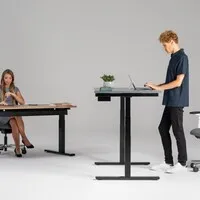
The above is an older source with relevant content. Computer work has traditionally been a sedentary activity. The first initiatives for a healthy working environment therefore focused on better chairs and aids such as keyboards. In recent years, however, there has been a shift whereby office workers are increasingly being advised to work more actively. For example, by purchasing a sit-stand desk. However, the impact of such a sit-stand desk can remain minimal if it is not used properly, as some studies now also highlight.
Is sitting and standing bad for you?
Recent research from 2017 shows that people in professions where they have to stand for long periods during the day have an increased risk of heart disease. Another study from the same year indicated that standing for two hours at a time can cause discomfort throughout the body. Reaction times and concentration suffered, although problem-solving ability did improve whilst standing.
As we wrote (much) earlier, prolonged sitting won’t improve your life expectancy either, leaving you hanging upside down or lying flat. I must point out, however, that manymorestudies have been conducted into the impact of sitting, and sitting for long periods at a time in the office should certainly be avoided.
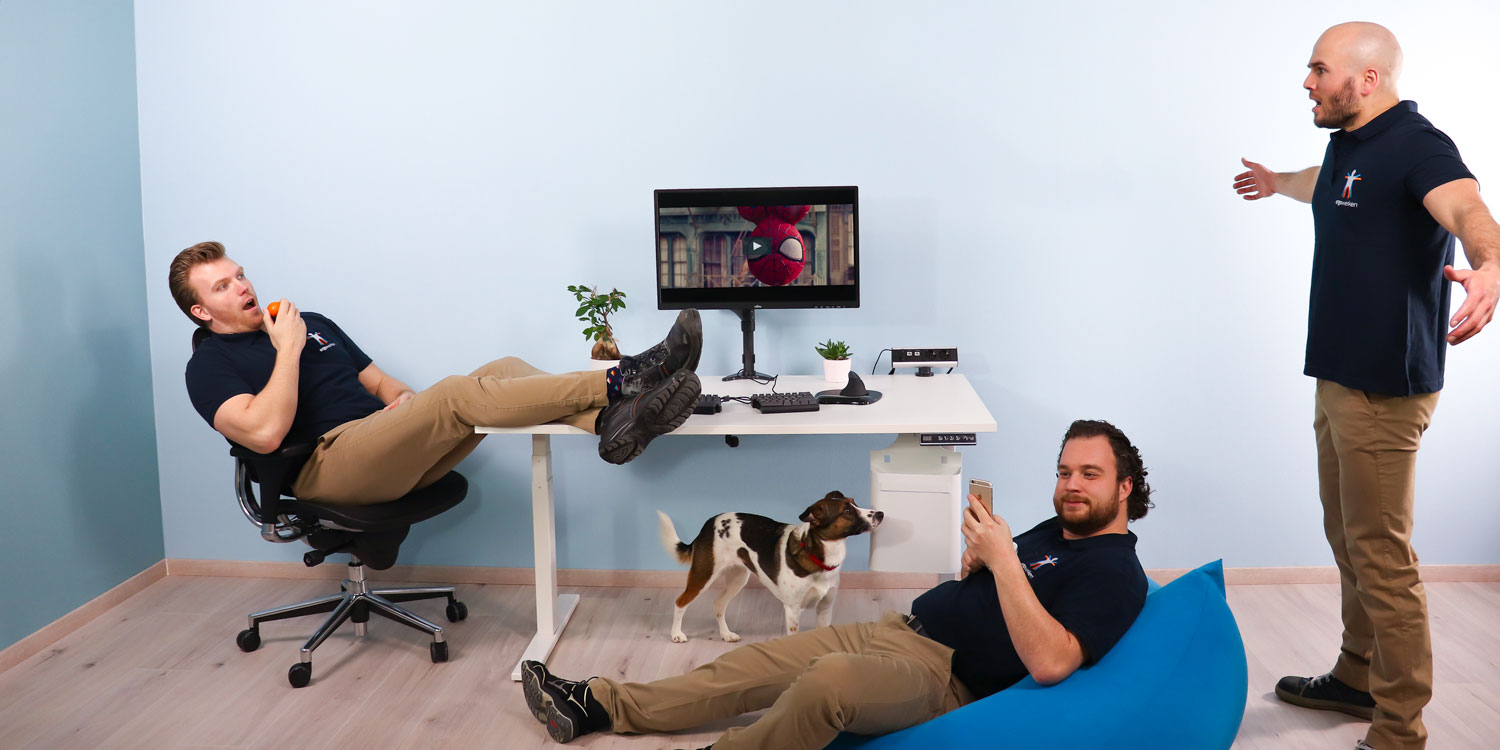
Sitting, standing, sitting, standing, sitting, standing
If there’s one thing the scientific community agrees on, it’s that exercise is good for you. There are plenty of benefits to moderate to vigorous exercise. When we look at moderate-intensity exercise, there’s plenty of ‘office-friendly’ options to choose from.
- A brisk walk – during your break, or take the stairs
- Household chores – tidy up your office
- Taking an active part in games – table football, table tennis; more and more companies are introducing these kinds of break activities for employees
- Carrying items weighing under 20 kg – why not voluntarily walk a few reams of printer paper to the printer
You can see that the average intensity already demands quite a bit from your working day, as in many cases you actually have to make time for it. Fortunately, some studies have already been conducted into the impact of low-intensity exercise. Although the impact varies across different studies, it is certainly positive. This intensity level includes the following, amongst other things:
- Brisk walking
- Simple household chores
- Everyday activities, such as cooking
Studies into these activities report improvements in mental well-being (lower risk of depression), improved blood sugar levels and improved muscle and joint health. That makes it a lot easier to stay active, because it means that a quick trip to the coffee machine or alternating between sitting and standing are already a win-win.
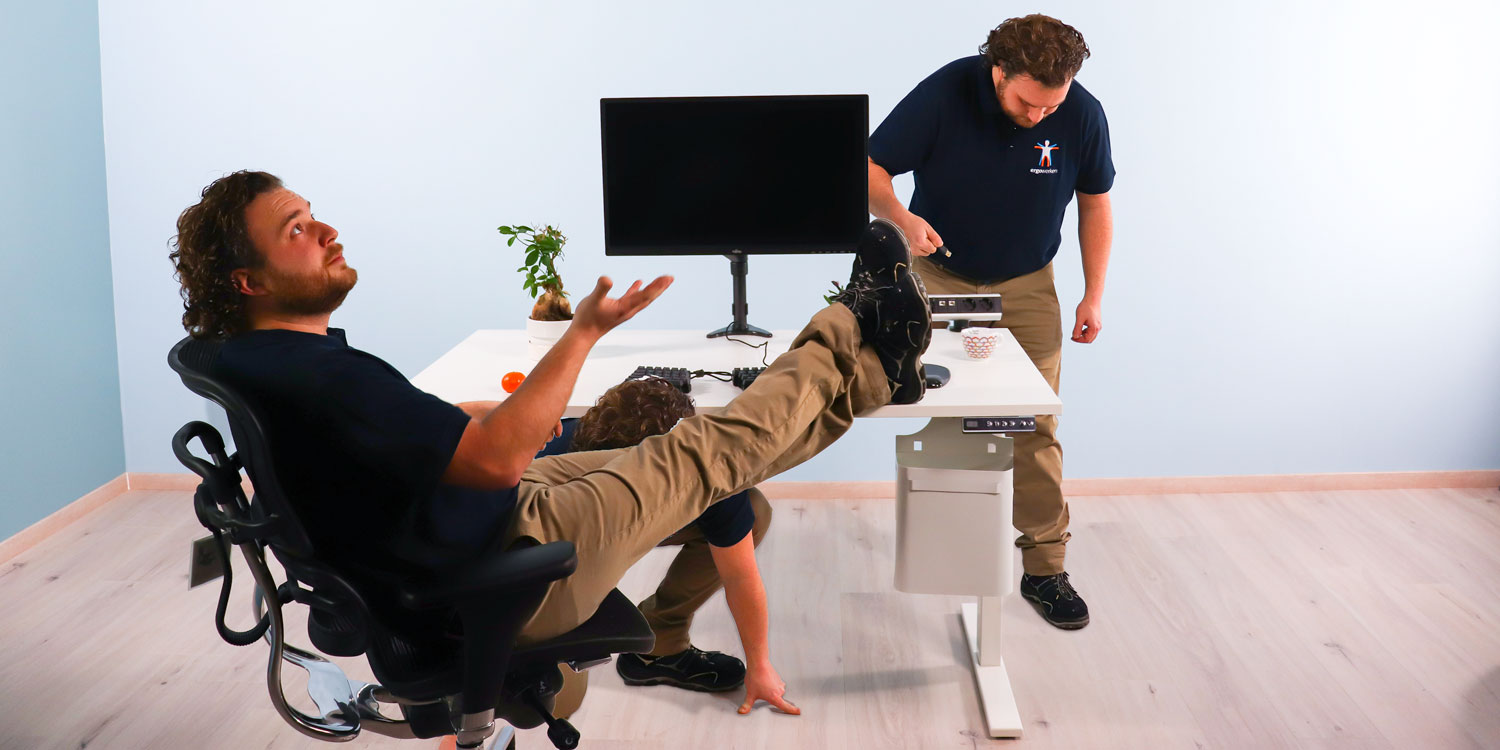
Conclusion: a bit of science
We can keep this fairly simple. We must run, jump, dive, fall, get up and carry on. We can’t stay here any longer; we can’t just sit or stand here any longer.
Looking at the research findings, a static posture – whether sitting or standing – is not good for us. Exercise, on the other hand, seems to be an absolute blessing, whether it is of light or high intensity.
So is there no single posture that ‘rules them all’?
What researchers agree on is that keeping active, eating well and exercising have a positive effect on health. Sitting for long periods and standing for long periods amount to the same thing: not moving. And not moving turns us into flabby little piles of flesh. So mix things up: regularly walk over to colleagues, fetch a round of coffee (which is nice and sociable too) and take the stairs instead of the lift whenever possible. Also, make sure you keep a close eye on your posture when sitting or standing is unavoidable.