







5 reasons to start paying attention to your posture today
Table of Contents
1. Physical complaints2. Inability to perform work properly
3. Mental health effects
4. Absenteeism
5. Personal life suffers
Just last week, I wrote about maintaining a healthy posture in the office. I have also previously described the benefits of an ergonomic workplace in detail in a three-partblogseries. Although your employer has a legal duty to ensure that you get through the day comfortably and without complaints, it is wise to take this seriously yourself as well. Not only because employers do not always do enough in terms of prevention (less than 30%), but also because you have a personal responsibility in this regard.
Yes, your employer can buy you a fully adjustable office chair (yay, comfy seating) and install table football (yay, exercise during breaks), but if you don’t make use of them, these initiatives are pointless. So here we go again: 5 important reasons why you need to start paying more attention to your posture in the coming period.
1. Physical complaints
The effects of poor posture have been studied so often and, time and again, found to be severe. To name just a few:
It is striking that we tend only to take action regarding our bodies once they start sending us signals of pain. The Google statistics below clearly illustrate this:
- You are more likely to develop shoulder and back problems
- Muscles are more likely to ache (cramp)
- You feel less energetic or even depressed
- There is an increased risk of stress
- Your breathing is less efficient
The other four reasons you’re about to read all actually stem from these physical discomforts. It’s important to take these discomforts seriously from the outset, because, just like a sports injury that may seem harmless at first glance, they can develop into something that continues to affect you. Unfortunately, we see this happen time and again with our own clients.
Work-related ergonomic complaints are quite significant. A study by Noties found that lower back pain (43%), neck pain (40%) and shoulder pain (35%) were the most common.
2. Inability to perform work properly
Anyone who has ever dealt with physical complaints will recognise this. Those days when you have to work around the pain just to get your work done properly. In many cases, this amounts to a day or, at most, a short week. If you have to put up with it for longer, you will really start to notice that your productivity suffers.
Think of back pain that leaves you unsure how to sit or stand properly all day. Shoulder pain can be even worse, as every movement of the mouse feels like one too many. You’re at your wits’ end, figuratively speaking, because there’s absolutely no time to do so literally! Reports need to be finished, graphic work must be with the client by Friday, and the paperwork is already piling up.
We see this ourselves every day with clients. People don’t pay enough attention to their posture, the correct workplace setup, taking enough breaks, or listening to their bodies. This leads to frustration, stress and annoyance, because “why do I get pain and my colleagues who do the same work don’t?”. In any case, don’t use your colleagues as a benchmark. Everyone is different, and you may develop aches and pains more quickly from poor posture than your colleague. Also bear in mind that other colleagues may well be suffering from complaints that, just like you, they prefer to keep to themselves.
3. Mental consequences
Poor posture can take a significant mental toll. The example above illustrates this. Physical discomfort resulting from poor posture does not go unnoticed. It affects you all day long, and over a longer period, this will certainly have an impact on your mental resilience. Additional stress and burnout can be an unpleasant consequence of this.
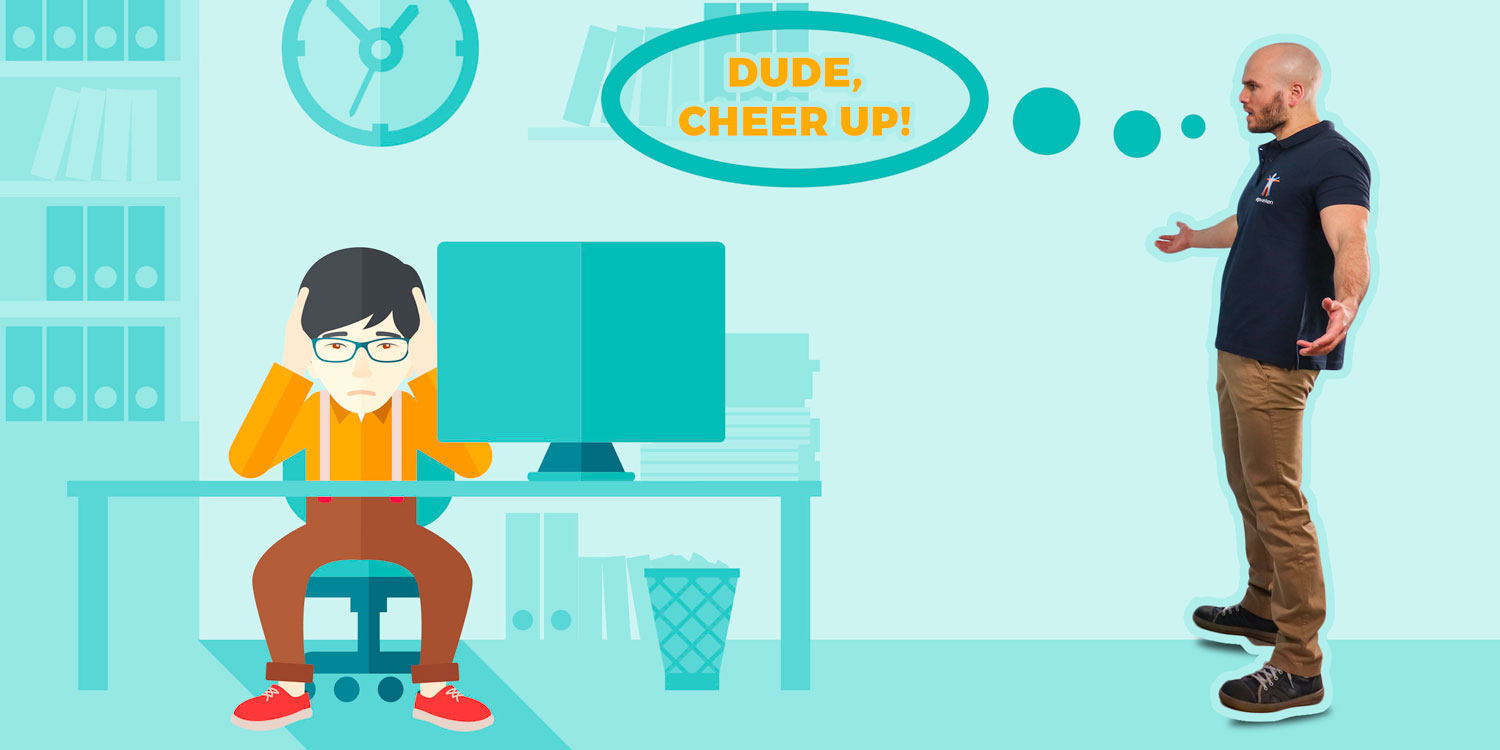
You want to avoid stress, as it can only exacerbate your symptoms. Research by Noties shows that stress can worsen physical symptoms by 26 to 50 per cent. Stress appears to be a major factor when it comes to sick leave. Poor posture can therefore give your stress process (which rolls off the tongue nicely) an extra nudge in the wrong direction.
A study conducted in Nigeria among librarians found that good ergonomics improved job satisfaction. Another study shows that good posture boosts self-confidence and reduces stress.
4. Absenteeism
Reasons 1 to 3 gradually build up to the point where you really can no longer carry out your work properly. This results in (partial) absence from work. Are you reading this because you’ve reached this point? It may already be too late for simple adjustments to your posture, so make sure it doesn’t get any worse. Consult your GP, your physiotherapist and, if necessary, seek help from a professional such as an ergonomist.

Complaints caused by poor posture are often described using the term RSI (repetitive strain injury). Put simply, these are complaints arising from movements we perform repeatedly throughout the day and which place a strain on us. We know that 3.2 million working people in the Netherlands have experienced RSI and that it costs society 2 billion euros a year. As many as 15% of sick days are actually due to RSI complaints.
How strange is it that 50% of reported occupational illnesses relate to RSI, yet employers are not particularly keen on preventing it. At 29%, SMEs that do something about prevention make up the largest group. Only 9% of sole traders invest in ergonomics, which is perhaps even more alarming. Absenteeism as a self-employed person is the biggest nightmare, especially as only 19% take out insurance against incapacity for work.
5. Personal life suffers
Being unable to open a jar lid, a crampy back in bed, wrist pain from playing tennis. The list of complaints that you drag from work into your private life could, of course, go on much longer. Perhaps you can add to it yourself, much to your own chagrin. Not being able to do your job properly is bad enough in itself, let alone having to deal with the consequences of poor posture in your private life as well.
Getting started with your posture
Would you like to take an active approach to your posture? Then read about the ideal posture in the office and how you can sit and stand comfortably. Would you like a professional to take a look? Then check out our ergonomic services.