


BUYING A BALANCE BOARD?
DISCOVER THE BEST BALANCE BOARD FOR ACTIVE STANDING


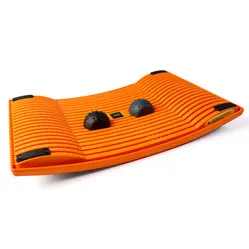
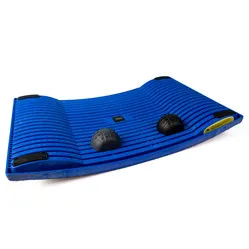
Customer reviews of their balance board
Why use a balance board?
Active standing during work
Those who stand for a long time at a desk or workstation often find that standing still becomes tiring. A balance board helps you to subtly keep moving. You automatically shift your weight and activate muscles in your legs and torso without being distracted from your work.
Ideal for a sit-stand desk
A sit-stand desk works best if you not only alternate between sitting and standing, but also introduce variation during standing itself. A balance board makes this easier. You stand less statically and create more dynamism in your working posture.
More variety at the workplace
A balance board is suitable for the office, working from home, and other workplaces where employees regularly stand. It is an accessible way to add movement to the workday without immediately doing an intensive exercise. This makes it a good fit for an ergonomic and modern workplace.
5 tips to get the most out of your balance board
- Start slowly and build up usage
Are you using a balance board for the first time? Start with short periods of a few minutes and gradually build this up. This way you get used to the movement and instability.
- Use the board in addition to alternating sitting and standing
A balance board works best as part of a dynamic workday. Alternate between sitting, standing, and moving for a healthy working posture.
- Place the board on a flat surface
Ensure your balance board is used stably and safely on a flat floor. This provides the best experience and more control during movement.
- Use it during tasks where you type less
Many people use a balance board mainly during calls, reading, online meetings, or short computer tasks. This makes it easier to get used to it comfortably.
- Choose a model that suits your workplace
Some boards are more compact and subtle in movement, while others offer more dynamism. Choose a model that suits your preference and way of working.
What to look for when choosing a balance board?
Not every balance board works the same. When choosing a suitable model, pay attention to the degree of movement, the material, the grip, and the size. Some models are designed for subtle micro-movements, while others provide a more active standing experience.
The underside also plays an important role. A good balance board remains stable in place and offers sufficient grip during use. In addition, it is pleasant if the surface feels comfortable when you stand on it for a longer period.
Do you mainly use the board in the office or with a sit-stand desk? Then a compact and quiet model is often the best choice. For those looking for more challenge or more intensive activation, a more dynamic balance board might be interesting.
Frequently asked questions about balance boards
- What is the difference between a 'balansboard' and a balance board?
There is no substantive difference. 'Balance board' is the English spelling, while 'balansboard' is often used as a search term in Dutch. Both terms refer to the same product.
- What do you use a balance board for?
You use a balance board to stand more actively while working. It helps to break up prolonged static standing and adds more movement to your working posture.
- Is a balance board suitable for a sit-stand desk?
Yes, a balance board is very suitable for a sit-stand desk. It makes standing work more dynamic and helps to introduce variety during the workday.
- Does a balance board help with ergonomic working?
A balance board can contribute to ergonomic working by encouraging active standing. It is especially a valuable addition to a workplace where alternation between sitting, standing, and moving is central.
- Who is a balance board suitable for?
A balance board is suitable for people who work at a sit-stand desk, work from home, or want to add more movement to their workday in the office. It is also widely used in flexible workspaces and modern office environments.
- Can you stand on a balance board all day?
It is usually better to use a balance board alternately rather than all day long. Combine it with normal standing, sitting, and short moments of movement for the best balance.