There are various products that can help you get rid of those annoying elbow complaints. Curious which products are most suitable for you?

Read below how these products can contribute to easing your complaint and click through to reach the category you want. Ergonomic mouse, Ergonomic keyboard, Wrist rest, Armrest, Office chair

Ergonomic mouse

An ergonomic mouse, also known as a vertical mouse or RSI mouse, encourages a better and healthier arm posture. Its special design places the hand, wrist, arm and shoulder in their natural position, which can help prevent complaints. Think of mouse arm or carpal tunnel syndrome.

What does an ergonomic mouse do for elbow complaints?
Where the traditional mouse is made purely for its function, an ergonomic mouse also considers the posture of the user. The hand, wrist and arm sit more in their natural position, bringing more relaxation to the whole arm. This can help prevent common RSI-related complaints.

  •  Natural posture
  •  Less strain in the elbow
  •  More relaxation throughout the arm
  •  Lower risk of RSI complaints
An ergonomic mouse is also good for:
Fingers • Hand • Forearm • Wrist • Upper arm • Shoulder • Neck

Ergonomic keyboard

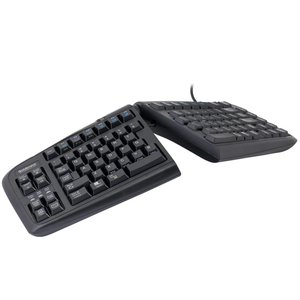
An ergonomic keyboard is developed with you as the user at its centre. It types comfortably, adapts better to your working posture and also takes other aids into account, such as your mouse. All of this is done to improve your working posture and let you work free of complaints for longer. An ergonomic keyboard can help you tackle complaints in the hand, wrist, forearm and shoulder in particular.

What does an ergonomic keyboard do for elbow complaints?
Using an ergonomic keyboard a good way to help prevent overuse, because it minimises the tension on the muscles. In the fight against elbow complaints, it is best to choose a split keyboard, because it lets you keep your forearm, wrist and hand in one line.

  •  Curved design
  •  Wrists in line with the arm
  •  Less muscle tension
  •  Fewer movements needed
An ergonomic keyboard is also good for:
Shoulder • Arm • Hand • Neck • Back • Wrist

Wrist rest

A wrist rest gives the muscles the relaxation they need. This can help prevent painful complaints in the arm and wrist. Wrist rests are available for both the keyboard and the mouse. It is recommended to use both, to reduce the risk of RSI complaints and to work comfortably.

What does a wrist rest do for elbow complaints?
A wrist rest gives the user the support they need in between work to keep the forearm, wrist and hand in one line. This benefits relaxation throughout the arm, minimising the repeated strain on the elbow that causes elbow complaints.
  •  Forearm, wrist and hand in one line
  •  Relaxed elbows
  •  Pleasant support in between work
  •  Lower risk of RSI
A wrist rest is also good for:
Back • Neck • Arm • Hand • Shoulder • Wrist

Ergonomic armrest

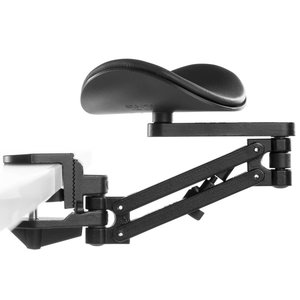
By using an armrest, your arm automatically adopts a healthy and comfortable working posture. The armrest provides constant support for the arm and gives it the relief it needs while working with a PC or laptop.

What does an armrest do for elbow complaints?
With an armrest you have constant support for the forearm. This posture relaxes the arm, so you can work more comfortably and in a more relaxed way. In addition, thanks to the armrest, the wrist is better aligned with the arm, which can help prevent strain in the elbow.

  •  Puts the arm in a better working posture
  •  Wrists in line with the arm
  •  More relaxation in the arms
  •  Provides constant support
An armrest is also good for:
Back • Shoulder • Neck • Arm • Wrist

Office chair

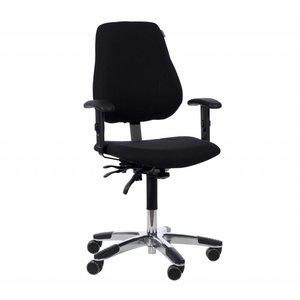
A good office chair is considered increasingly important. Not surprising when you consider that 29% of all Dutch people suffer from neck and/or back complaints. An ergonomic office chair offers support in the right places and ensures your body adopts a good posture.

What does an office chair do for elbow complaints?
A good office chair is one of the most important parts of a workstation. It is responsible for a large part of your posture and comfort. A good office chair has armrests, for example, on which the arms can rest in a relaxed way. The strain placed on your elbow over the course of the day is minimised this way.

  •  Gives support to the arms
  •  Can be adjusted to the individual
  •  Helps you relax more
  •  Encourages the correct sitting posture
An office chair is also good for:
Back • Legs • Neck • Lower back • Shoulders • Wrist