




HandshoeMouse Product Development
The origin of the HandshoeMouse lies with the Erasmus University Medical Centre in Rotterdam. Employees are increasingly seeing patients with complaints in the neck, arm, hands, and fingers. After research, it appears that a passage in the deep neck and a membrane in the forearm are most likely the cause of the complaints. The complaints are quite general, but they still focus on patients who use a keyboard and mouse for many hours daily. By selecting a target group, comparisons could be made more easily. In this way, employees of the Ministry of Finance who had complaints participated in the study.
As expected, the focal points in the neck and forearm were indeed the culprits. This formed the basis for further anatomical research, which was carried out at the University of Hasselt in Belgium.
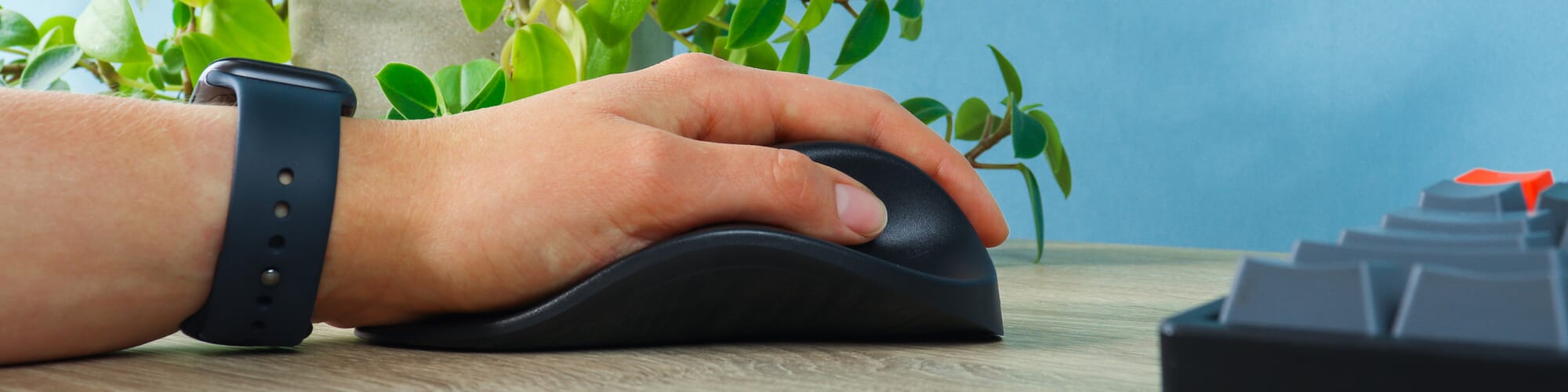
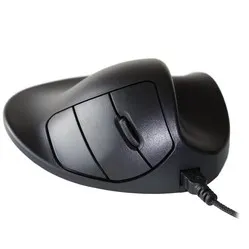
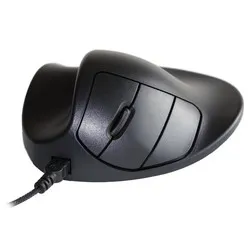
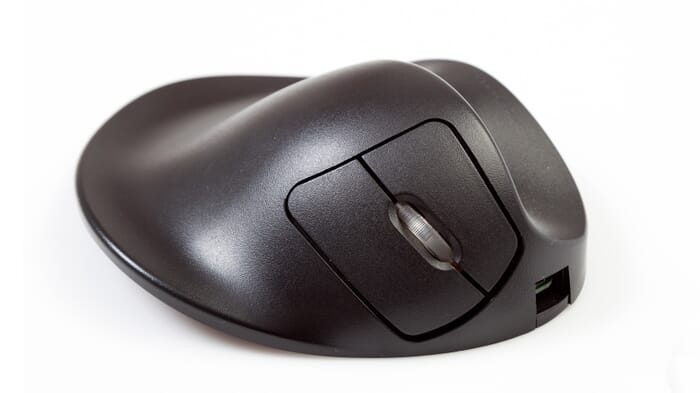
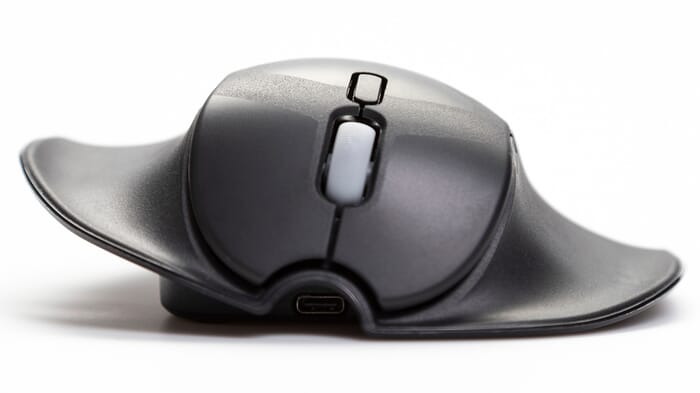
The research showed that a hand-supporting shape could be a possible solution to reduce or alleviate the complaints of mouse users. After many developments and adjustments, Hippus finally introduced the HandshoeMouse. It was presented in ergonomic work environments in Europe and North America. Eventually, so many units were sold that production was moved to Asia to keep up with sales.
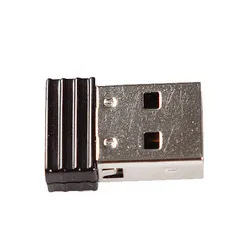
After years of development, the successor to the original HandshoeMouse is launched: the HandshoeMouse Shift. This variant can be used by both left and right-handed people. A sliding mechanism on the underside allows the mouse's position to be adjusted within seconds. This can be the ideal solution for people who want to switch hands when using their mouse to prevent complaints. The enlarged support surface offers extra comfort to the palm, fingers, and thumb. Finally, Bluetooth is added to the mouse, making it easier to use.
Later, it was decided to bring production back from Asia to the Netherlands. Conscious consideration was given to the production environment and the employees of HandshoeMouse. This way, everything can be better controlled, and every step taken can be carefully considered. In this way, the computer mice can be produced with minimal impact.