




BALANCE STOOL FOR ACTIVE SITTING
FROM 199,-
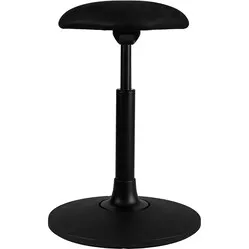
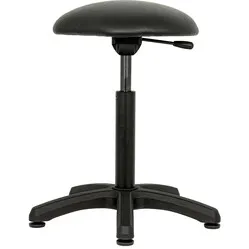
Quick answer: which balance stool should you choose?
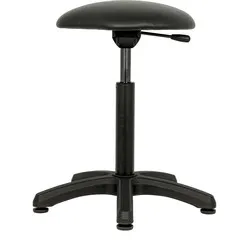
For most workplaces, the Balergo Classic is the starting point: a tilting saddle on a fixed five-star base. If you want a softer seat, choose the Classic with Comfort seat. If you're looking for extra movement, the Dynamic has a moving base that also engages your legs. For children, there's the Junior. If you are taller than 1.80 metres, choose the version with an XL gas spring.
When do you choose a balance stool?
You choose a balance stool if you notice that prolonged sitting is taking its toll: a slumping posture, stiff back or waning concentration. A balance stool keeps you moving while you continue to work. The movable seat activates your leg and back muscles. For the first few days, you'll really feel those muscles working; that's normal and will subside on its own.
Use the balance stool as an alternative to your office chair: the advice is a maximum of two hours continuously, as active sitting really works your muscles.
Balance stool, wobble stool or saddle stool?
The terms are often used interchangeably in practice; this is how we distinguish them.
Balance stool
A saddle-shaped seat that tilts itself, on a fixed base (Classic) or a moving base (Dynamic). The movement is in the seat, causing your torso to continuously balance slightly.
Wobble stool
With a wobble stool, the entire stool moves on a convex or spring-loaded base. Similar principle, different design; well-known examples include the Swopper and the Muvman.
Saddle stool
A saddle stool has a fixed saddle without tilting. You sit higher and more openly on it, which is pleasant for work where you frequently get on and off.
What complaints can a balance stool help with?
A balance stool can help reduce complaints caused by prolonged sitting: a stiff lower back, a slumping posture, or the feeling of being stiff when getting up at the end of the day. The tilting saddle keeps your torso gently moving, so you don't sit in exactly the same position for hours.
A balance stool is an aid, not a treatment. If you have existing complaints, consult your practitioner about which seating solution suits you. If you mainly sit too low or too statically, also consider a sit-stand desk or an ergonomic office chair as a fixed base alongside the stool.
What to look for when choosing?
Seat height and body length
The standard gas spring adjusts from 49 to 67 cm and suits a body length of 1.50 to 1.80 metres. If you are taller, choose the XL gas spring with a seat height of 55 to 79 cm.
Fixed or moving base
The Classic stands on a fixed five-star base with glides (diameter 48 cm). The Dynamic has a base that moves low to the ground, thereby also encouraging more pronounced leg movements.
Upholstery
The Concorde fabric (polyester-nylon, Martindale 40,000) has a pilot leather look; the PVC synthetic leather is 1.2 mm thick. Both are suitable for daily use at home and in the office.
For whom
For children, there is the Junior balance stool, with a lower entry point in price and size.
Tips for use
- Place your feet beneath you, in a posture similar to cycling or horse riding. This way, you get the most out of the tilt.
- Alternate: sit for a maximum of two consecutive hours on the balance stool, then switch to your office chair or take a standing break.
- Choose the gas spring that suits your height: standard up to 1.80 metres, above that the XL version.
- Allow 10 to 15 minutes for assembly; no tools are required.
- View the stretching, strengthening, and balance exercises for the stool on the Balergo brand page.
Frequently asked questions about balance stools
- Is a balance stool suitable for the office?
Yes. The standard seat height of 49 to 67 cm suits a regular desk, and with the XL gas spring, you can also work at a higher desk or partially standing. Choose fabric or synthetic leather; both are made for daily use.
- Who is a balance stool suitable for?
For anyone who sits a lot and wants more movement in their workday: office and home workers, but also children, as there is the Junior balance stool for them. The standard version suits a body length of 1.50 to 1.80 metres; if you are taller, there is the XL gas spring.
- What is the difference between a balance stool and a wobble stool?
With a balance stool, the seat itself tilts; with a wobble stool, the entire stool moves on a convex or spring-loaded base. The goal is the same: active sitting. Which feels more comfortable is personal; with the 30-day trial period, you can experience that at your leisure.
- Can I sit on a balance stool all day?
No, preferably not. The advice is a maximum of two consecutive hours. Active sitting strains your muscles, and the seat is deliberately a bit firmer. Use the balance stool as an alternative to your office chair.
- Does a balance stool help with back pain?
That depends on the cause. A balance stool encourages an active, upright posture and can thus help reduce complaints caused by prolonged sitting. If you have existing back pain, consult your practitioner about which seating solution suits you.