
















5 tips for a sharper mind
5 tips for a great brain boost
Here’s something to get your brain buzzing again
The end of the year is fastapproaching and we’re slowly drifting into hibernation. That’s precisely why NOW is the time to dive into your brain and put those grey cells to good use. You’ll start the new year feeling sharp. How? With a few great and easy-to-follow tips. No, we’re not going to bombard you with endless studies and figures that’ll make your head spin. Just five tips to help you keep that brain nice and sharp.
Your cognitive function – simply put, the thought process – is linked to the amount of exercise you get. This has been proven by a study. People who exercise less experience a much faster cognitive decline and are also more susceptible to dementia. When you exercise, your heart pumps oxygen-rich blood around your body, which your brain absolutely loves.
“Does that mean I have to spend ages at the gym a few times a week?” The answer is a resounding NO. The best physical exercises for the brain appear to be aerobic activities, such as walking and swimming. Getting off the bus one stop earlier on your way to work or taking a short walk in the evening after dinner can make a big difference. If you do this with a friend, the results are even better.
A study among students found that 30 minutes on the treadmill improved problem-solving skills by 10%. When a school introduced PE lessons before maths and reading tests, results went up by 20%! Now those are some impressive figures.
In the 1990s, researchers conducted a test on mice. What did they find? The mice that had access to a running wheel had twice as many nerve cells in the hippocampus as mice without a running wheel. Incidentally, the hippocampus is the part of the brain responsible for storing new memories. The ‘sporty’ mice were therefore able to learn new things faster than the ‘couch-potato’ mice.
A similar study has also been carried out on humans. The results were published earlier this year. The same interesting findings emerged. Fit people performed better in cognitive tests; memory, psychomotor skills (the speed between the brain sending a signal and the actual physical movement) and task performance were significantly better in fit people.
Our brains account for around 2% of our total body weight. Yet they burn 20% of the calories we consume every day. What’s more, they’re quite fussy. Fruit, vegetables, grains; our brains mainly want us to eat healthily. That’s what they thrive on best.
For the brain, it’s all about the simple carbohydrate glucose. Your body extracts this substance from all sorts of food, and it is partly burned by the brain for energy. Since there is an ideal amount of glucose (on average 25 grams) that needs to flow through your bloodstream, you get the most out of your food if you don’t eat three substantial meals a day, but rather small amounts throughout the day. Of course, you can’t have a snack every hour, but instead of three large meals, you could perhaps have six smaller ones.
To give the process an extra boost, I’ve listed 5 so-called ‘superfoods’ below. Don’t be too easily swayed by this catchy term and don’t switch 100% to these foods from now on. A varied diet remains the healthiest option. Still, it’s worth adding them to your meals from time to time. Not least because they’re often very tasty.
The best in the list when it comes to sharpening your grey matter. It turns out your brain is extremely active during sleep, replaying events from your day. Over and over and over again. It can do this much faster than when you’re awake. Your brain also makes connections between old and new memories. Sleep is therefore crucial when, for example, preparing a presentation or revising for an important exam. It has been scientifically proven that not getting enough sleep can reduce your ability to learn by up to 40%.
You also process information whilst sleeping, which makes it easier for you to make decisions later on when you’re awake again. For instance, a 2007 study showed that immediately after waking up, you’re 33% more likely to make connections between unrelated ideas.
A study on mice revealed that the brain carries out a major clean-up during sleep. Harmful molecules that had accumulated during the day were removed. First, more space was created between the brain cells, making it easier for the molecules to be cleared away.
So it turns out that sleep is important for your brain. It helps you learn faster, makes decision-making easier, and you also unconsciously kick out a few unwanted guests. Sleeping is quite an intensive process, isn’t it?
Your daily routine becomes more and more familiar as you get older. You wake up, have breakfast, drive to work, grab a quick lunch around 1, head home at 6, have dinner at 7 and go to bed around 11. That doesn’t sound very exciting, does it? Your brain thinks so too. To keep it sharp, you need to step out of your comfort zone regularly and do something different. Try to meet the following conditions:
Do you always take the same route to work? Why not try a shortcut (The author of this blog is not responsible if you arrive late for work and consequently get into trouble with your boss). Do you always walk the dog on the same route? Change your route. Visit new places. Listen to new ideas. At the very least, look for stimuli that will challenge you again. These don’t have to be earth-shattering changes.
A recent study has shown that older people who still had plenty of social contacts had much better memory and cognitive skills.
Older people who were less socially active had poorer physical health, a weaker memory and a much ‘older’ brain than the socially active group.
A social life therefore helps us stay healthier and sharper for longer. Those are the more positive findings.
Sources:
Businessinsider.com
Strokeassociation.org
webmd.com
brainfacts.org
psychologytoday.com
livescience.com
bbcgoodfood.com
huffingtonpost.com
The end of the year is fastapproaching and we’re slowly drifting into hibernation. That’s precisely why NOW is the time to dive into your brain and put those grey cells to good use. You’ll start the new year feeling sharp. How? With a few great and easy-to-follow tips. No, we’re not going to bombard you with endless studies and figures that’ll make your head spin. Just five tips to help you keep that brain nice and sharp.
1. Get moving
A fit body for a fit mindYour cognitive function – simply put, the thought process – is linked to the amount of exercise you get. This has been proven by a study. People who exercise less experience a much faster cognitive decline and are also more susceptible to dementia. When you exercise, your heart pumps oxygen-rich blood around your body, which your brain absolutely loves.
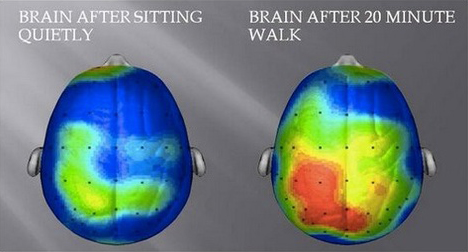
“Does that mean I have to spend ages at the gym a few times a week?” The answer is a resounding NO. The best physical exercises for the brain appear to be aerobic activities, such as walking and swimming. Getting off the bus one stop earlier on your way to work or taking a short walk in the evening after dinner can make a big difference. If you do this with a friend, the results are even better.
A study among students found that 30 minutes on the treadmill improved problem-solving skills by 10%. When a school introduced PE lessons before maths and reading tests, results went up by 20%! Now those are some impressive figures.
Brain activity after 20 minutes of walking
In the 1990s, researchers conducted a test on mice. What did they find? The mice that had access to a running wheel had twice as many nerve cells in the hippocampus as mice without a running wheel. Incidentally, the hippocampus is the part of the brain responsible for storing new memories. The ‘sporty’ mice were therefore able to learn new things faster than the ‘couch-potato’ mice.
A similar study has also been carried out on humans. The results were published earlier this year. The same interesting findings emerged. Fit people performed better in cognitive tests; memory, psychomotor skills (the speed between the brain sending a signal and the actual physical movement) and task performance were significantly better in fit people.
2. Eating is knowing
Your brain needs fuel tooOur brains account for around 2% of our total body weight. Yet they burn 20% of the calories we consume every day. What’s more, they’re quite fussy. Fruit, vegetables, grains; our brains mainly want us to eat healthily. That’s what they thrive on best.
For the brain, it’s all about the simple carbohydrate glucose. Your body extracts this substance from all sorts of food, and it is partly burned by the brain for energy. Since there is an ideal amount of glucose (on average 25 grams) that needs to flow through your bloodstream, you get the most out of your food if you don’t eat three substantial meals a day, but rather small amounts throughout the day. Of course, you can’t have a snack every hour, but instead of three large meals, you could perhaps have six smaller ones.
To give the process an extra boost, I’ve listed 5 so-called ‘superfoods’ below. Don’t be too easily swayed by this catchy term and don’t switch 100% to these foods from now on. A varied diet remains the healthiest option. Still, it’s worth adding them to your meals from time to time. Not least because they’re often very tasty.
- Blueberries – Help reduce stress and protect the brain against age-related diseases such as Alzheimer’s. They improve your learning ability and also enhance your motor skills.
- Oily fish – A source of essential fatty acids, such as Omega-3 fatty acids EPA and DHA. Am I just throwing around some meaningless terms here? In any case, these are acids that help protect your brain against conditions such as depression and disease.
- Nuts and seeds – My favourite. Delicious vitamin E bombs. And vitamin E just happens to protect you against cognitive decline. So feel free to add some walnuts to your breakfast.
- Avocados – Improve blood circulation and lower blood pressure. So they’re good for the brain. Avocados also help slow the decline in cognitive abilities. As they’re quite high in calories, it’s best not to eat too many. Half an avocado a day is enough
- Tomatoes – Contain the antioxidant lycopene, which protects the brain against the development of dementia, such as Alzheimer’s.
3. Get enough sleep
Sleep for a sharper brain? Ha! SleepThe best in the list when it comes to sharpening your grey matter. It turns out your brain is extremely active during sleep, replaying events from your day. Over and over and over again. It can do this much faster than when you’re awake. Your brain also makes connections between old and new memories. Sleep is therefore crucial when, for example, preparing a presentation or revising for an important exam. It has been scientifically proven that not getting enough sleep can reduce your ability to learn by up to 40%.
You also process information whilst sleeping, which makes it easier for you to make decisions later on when you’re awake again. For instance, a 2007 study showed that immediately after waking up, you’re 33% more likely to make connections between unrelated ideas.
A study on mice revealed that the brain carries out a major clean-up during sleep. Harmful molecules that had accumulated during the day were removed. First, more space was created between the brain cells, making it easier for the molecules to be cleared away.
So it turns out that sleep is important for your brain. It helps you learn faster, makes decision-making easier, and you also unconsciously kick out a few unwanted guests. Sleeping is quite an intensive process, isn’t it?
4. Challenge yourself
Try something newYour daily routine becomes more and more familiar as you get older. You wake up, have breakfast, drive to work, grab a quick lunch around 1, head home at 6, have dinner at 7 and go to bed around 11. That doesn’t sound very exciting, does it? Your brain thinks so too. To keep it sharp, you need to step out of your comfort zone regularly and do something different. Try to meet the following conditions:
- It’s fun
- It’s challenging
- It’s new
Do you always take the same route to work? Why not try a shortcut (The author of this blog is not responsible if you arrive late for work and consequently get into trouble with your boss). Do you always walk the dog on the same route? Change your route. Visit new places. Listen to new ideas. At the very least, look for stimuli that will challenge you again. These don’t have to be earth-shattering changes.
5. Socialise to your heart’s content
Get together with your friends and meet new peopleA recent study has shown that older people who still had plenty of social contacts had much better memory and cognitive skills.
Older people who were less socially active had poorer physical health, a weaker memory and a much ‘older’ brain than the socially active group.
A social life therefore helps us stay healthier and sharper for longer. Those are the more positive findings.
Conclusion
What should you do now? It’s very simple! Start with a nap, enjoy a healthy meal, hop on your bike, take a completely different route than usual to visit one of your friends, and have a few drinks there (free bonus tip: alcohol is actually good for you in moderation).Sources:
Businessinsider.com
Strokeassociation.org
webmd.com
brainfacts.org
psychologytoday.com
livescience.com
bbcgoodfood.com
huffingtonpost.com
Other blog posts
Wrist pain: tips and 5 simple exercises (28 August 2014)
Mouse arm: information and tips (24 April 2014)
RSI in the workplace (17 July 2014)
What is ergonomics (4 March 2014)
Mouse arm: information and tips (24 April 2014)
RSI in the workplace (17 July 2014)
What is ergonomics (4 March 2014)